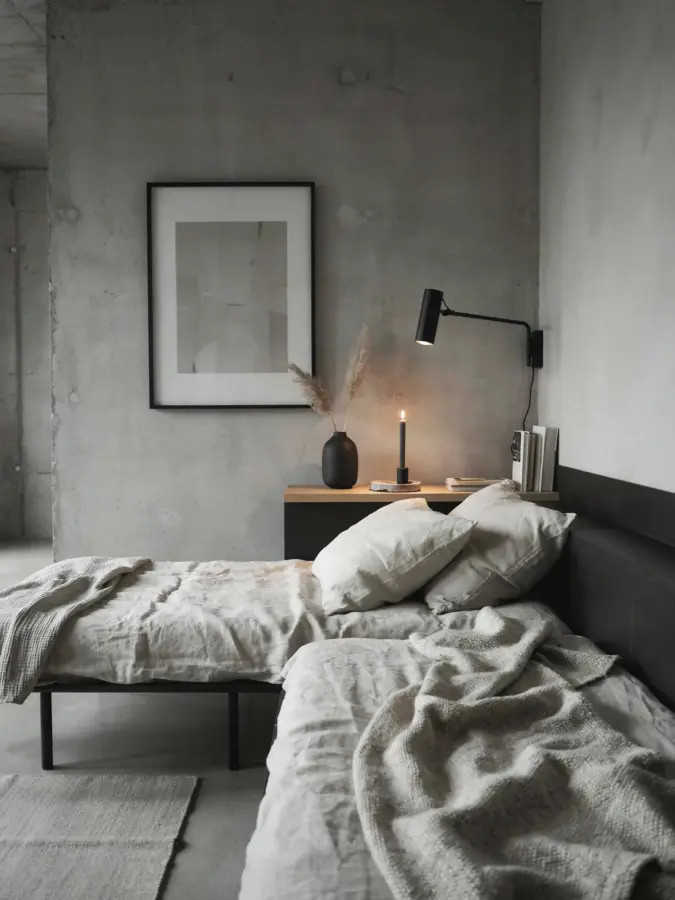
Right now, my living room looks almost empty. One beige linen sofa, a low oak sideboard, a single wool throw draped over the armrest, and a small ceramic vase on the coffee table. That’s the whole room. I didn’t start with a plan to create a scandi minimalist home; I just got tired of tripping over stuff. After a few years of trial and error, I landed on a simple rule that actually works: keep only what is useful or beautiful to me. Everything else gets donated, recycled, or thrown out.
Why I Started With the Coffee Table and Worked Outward
My coffee table used to hold a remote, three magazines, a candle, a coaster, a book, and a plant that kept dropping leaves. It looked busy, not cozy. So I cleared it completely, put down one vase, and stood back. Honestly, the room felt calmer in about ten seconds. That single change made me want to test the same idea on the shelves, the sideboard, and eventually the floor.
If you are currently staring at a full living room and wondering where to start, begin with the biggest flat surface you see. Clear it off, wipe it down, and place only one or two objects back. See how that feels. You don’t need to declutter the whole house tonight, just one tabletop will show you the difference.
The Real Test: Does It Earn Its Space by Being Useful or Beautiful?
Here’s the thing, my definition of “useful” is broad. A remote control is useful. A stack of old newspapers is not. “Beautiful” is also personal. That slightly crooked ceramic bowl my nephew made? It stays forever. An expensive scented candle I never actually light? It goes.
When I walk around the living room now, I ask one question for each object. Would I buy this again today? If the answer is no, it leaves. This question is ruthless, but it stops me from keeping things out of guilt or habit. And it works for the big items too, like the oversized armchair that nobody ever sits in. It looked nice from the showroom, but in my real life, it just collected dog hair. Gone.
- Make a pile of things you haven’t touched in six months.
- Take a photo of the room before you remove anything, so you can compare later.
- Give yourself a small reward when the pile is gone. I buy fresh tulips.
Natural Materials Do the Heavy Lifting in a Neutral Living Room
Once the clutter was gone, I noticed the remaining pieces looked a little sad. My old black TV stand and gray polyester rug made the empty space feel cold. So I swapped them for oak and linen. That was the moment everything clicked. Natural materials like wood, wool, rattan, and stone add texture without adding visual noise. The room suddenly felt warm, even with almost nothing in it.
You don’t need to replace your entire furniture set to get this effect. Just bring in one natural object, a wooden bowl, a jute rug, a cotton throw. Place it near a window and let the light hit it. Then notice how the room changes. The light neutral palette works because it lets those textures stand out without competing for attention.
Why Empty Space Is Not Wasted Space
This was the hardest lesson for me. I used to think a wall needed a painting and a corner needed a plant. Now I know that a blank wall or a quiet corner helps your eyes rest. The empty spots are what make the useful pieces feel intentional. So I stopped filling gaps. I moved the floor lamp away from the corner and left the corner bare. It sounds strange, but that empty corner is now my favorite part of the room.
When you declutter a living room, you are not just removing objects. You are removing visual stress. Every free surface gives your brain a little pause. That is why scandinavian minimalism feels so soothing, it gives you permission to not fill the space.
What I Do When I Miss the Old Stuff
Not gonna lie, I had a few regrets at first. That old bookshelf was fine, I just didn’t love it. But giving it away left a bare wall that now makes the room feel twice as large. The regret faded fast, and I found that I only missed the comfort of having familiar things around, not the things themselves.
One trick that helped me: I stored the items I was unsure about in a cardboard box in the closet for a month. If I didn’t open the box in 30 days, I donated the contents without looking. This works because the fear of losing something is stronger than the actual loss. After a month, you won’t even remember what is inside.
A Weekly Five-Minute Reset to Keep the Calm
Minimalism is not a one-time event. My living room gets messy again, especially after the weekend. So I set a timer every Sunday night and walk the room with a small basket. Anything that doesn’t belong goes back to its home or into the basket. Then I put the basket in the hallway for later. That’s it. Five minutes, no drama.
The thing that keeps this working is that I never let my storage fill up. If a drawer is full, something has to leave. That rule sounds harsh, but it stops the slow creep of clutter from ever starting again. My living room stays calm because I make the decision about every item before it gets a spot.
Look, I know this lifestyle is not for everyone. Some people love a cozy clutter and that is perfectly okay. But if you are tired of a living room that feels more like a storage unit than a place to relax, give my rule a try. Clear a surface, keep only what you use or love, and let the empty space do its job. You might surprise yourself with how good it feels to breathe in there.
Leave a Comment