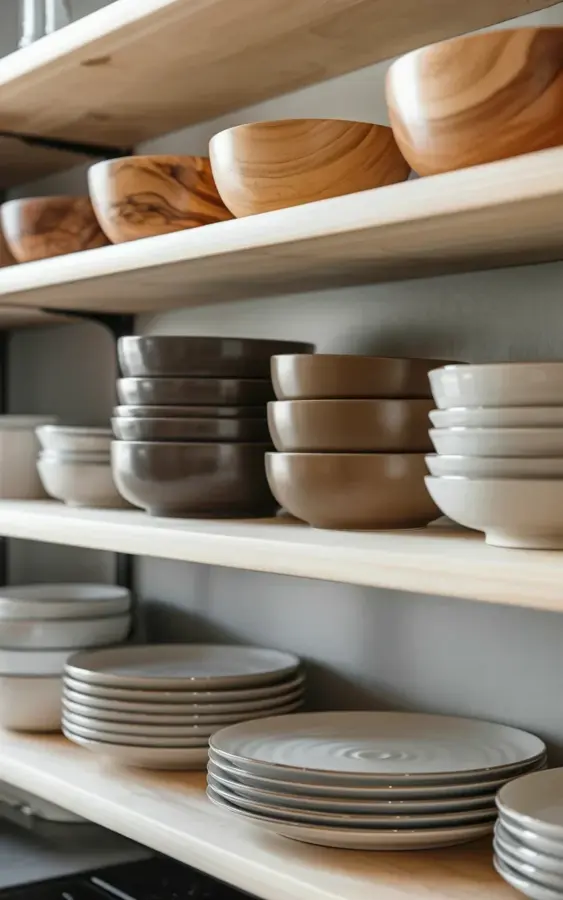
If you have ever stared into a cluttered cupboard and wished for a calmer, more functional space, this kitchen shelf organization tip might be exactly what you need. I finally got my shelves looking tidy by stacking ceramic and wooden bowls neatly, and the result feels almost like a small daily meditation. The photo that inspired me shows white wooden shelving with natural wood grain, where the top shelf holds several light brown wooden bowls, the middle shelves feature matte brown and beige ceramic bowls in neat stacks, and the bottom shelf displays white ceramic plates with subtle ring patterns. It is simple, practical, and surprisingly satisfying to replicate.
Why grouping by material and color makes bowl storage easier
Grouping by material and color is the secret behind this clean look. When you separate wooden bowls from ceramic ones, you create visual rhythm that makes the whole shelf feel intentional. The natural wood grain on the top shelf provides warmth, while the matte ceramic tones below add a grounded, earthy contrast. White plates at the bottom act as a neutral anchor. This method also makes grabbing a bowl quick because you know exactly where each type lives. No more digging through mismatched stacks.
For a minimalist kitchen, this approach reduces decision fatigue. You do not have to think about which bowl matches which shelf. The color palette stays limited to wood tones, beige, brown, and white, which keeps everything cohesive. Plus, grouping by material prevents scratches. Heavy ceramic bowls rest on other ceramic pieces, not on delicate wood surfaces. It is a small detail that protects your dishes over time.
Step 1: Place your wooden bowls on the top shelf
Start with the highest shelf because wooden bowls are typically lighter and less fragile than ceramic ones. In the photo, the top shelf holds several wooden bowls with visible natural wood grain patterns in light brown tones. I recommend stacking them in a single row, nesting the smallest inside the largest if they are similar shapes. This keeps the stack stable and easy to pull apart.
If your wooden bowls vary in size, arrange them from largest at the back to smallest at the front. That way you can see each bowl without moving the whole pile. Keep the top shelf less crowded so the wood grain stands out. A tight stack of three or four bowls looks cleaner than a teetering tower. And remember to leave a little space between the bowls and the shelf edge so nothing tumbles off when you open the cabinet door.
Step 2: Stack ceramic bowls in neat piles on the middle shelves
Ceramic bowls tend to be heavier, so placing them on middle shelves makes them easy to reach without stretching or bending. In the image, the middle shelves contain a mix of matte brown and beige ceramic bowls arranged in neat stacks. I like to stack bowls of the same size together to avoid wobbling. If your collection includes different diameters, create separate stacks for each size.
For a cohesive look, keep similar colors together. Brown ceramics on one side, beige on the other. This matches the photo and gives your shelves a deliberate, curated feel. When stacking, place a small kitchen towel or a square of felt between each bowl if you worry about scratching. Otherwise, dry bowls stacked cleanly against each other are fine. Just make sure the stacks are no more than four or five bowls high for stability.
Step 3: Add white plates on the bottom shelf for contrast
The bottom shelf in the photo features white ceramic plates with subtle ring patterns around their edges. Plates are heavier and less frequently accessed than bowls, so putting them at the bottom makes sense. Stack them flat, all facing the same direction, to create a clean rectangular block of white. This visual base grounds the shelves above.
If your plates have different diameters, stack the largest on the bottom and work up to the smallest. White plates work well here because they reflect light and make the lower shelf feel less heavy. The subtle ring pattern adds a little texture without breaking the minimalist vibe. You can also slide a plate divider between stacks to keep them from shifting. But honestly, a simple stack of five or six plates stays put just fine.
Tips for keeping your bowl stacks stable and accessible
Stability matters more than you think when you are reaching for bowls daily. Here are a few concrete tips I have learned from trial and error:
- Match stack heights. Keep each stack the same height across the shelf so nothing looks lopsided. This also prevents accidents when you pull out one bowl.
- Use non-slip shelf liners. A thin rubber or cork liner under each stack stops bowls from sliding when you open the door quickly.
- Leave a finger gap. Between the back of the stack and the shelf wall, give yourself half an inch so you can grip the top bowl easily.
- Rotate your stack order. If you use the same bowl repeatedly, move it to the top of the stack rather than pulling from the middle. This keeps the pile uniform.
- Avoid nesting dissimilar shapes. Round bowls stack well, but square or oval bowls need their own stacks. Mixing shapes makes the pile unstable.
These small habits turn a pretty shelf into a truly functional storage system. You will find yourself grabbing bowls without thinking, which is the whole point.
How to maintain this minimalist kitchen shelf look over time
The beauty of this system is that it does not require constant fussing. Once you have arranged your wooden bowls on top, ceramic bowls in the middle, and white plates on the bottom, maintenance is mostly about putting things back in the right spot. I keep a small step stool nearby because the top shelf is high, but that also prevents clutter from piling up.
Every couple of weeks, dust the shelves with a dry microfiber cloth. Bowls and plates accumulate fine particles, especially if your kitchen gets greasy. Wipe each bowl before returning it to the stack. This keeps the matte finishes looking fresh and the wood grain from getting dull. Also check for any chips or cracks. A chipped bowl can damage the bowl below it when stacked.
If you add new bowls, simply fit them into the existing color and material groups. Do not force a bright red ceramic bowl into the beige section. Either donate the odd piece or create a separate mini stack on another shelf. The minimalist look thrives on restraint.
Try this shelf arrangement for your own kitchen
I have shared this method with a few friends, and everyone who tries it says the same thing: their morning coffee routine feels calmer. Seeing those neat stacks of wooden and ceramic bowls on white shelves makes the whole kitchen feel more organized. You do not need a massive renovation or fancy storage bins. Just a little sorting by material and color, plus a commitment to stacking neatly.
Take a photo of your own shelf after you arrange it. Compare it to the dreamy shot that inspired you. I bet your results will be just as satisfying. So clear off a shelf, gather your bowls and plates, and try this layered approach. Your future self will thank you every time you grab a bowl without digging through a mess.
#kitchenorganization #shelving #minimalistkitchen #bowlstorage #woodenshelves
Leave a Comment