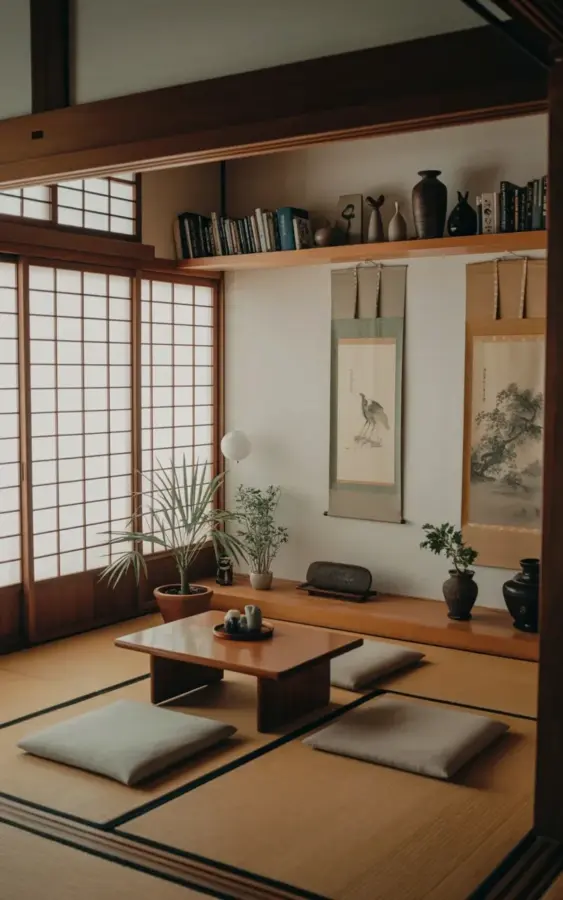
A low wooden table. Two gray cushions. White walls holding quiet scroll paintings. That was the scene I wanted, so I bought a rug that almost matched the photo, folded a blanket into a square, and called it done. It looked like a waiting room. Nothing about it felt grounded. Then I replaced the rug with proper tatami mat flooring, and the whole room let out a breath it had been holding. If you’re aiming for a JapaneseStyleLivingRoom, the surface underfoot is not a detail. It’s the foundation that makes everything else stop pretending.
—
Why Tatami Mat Flooring Is the Backbone of a Japanese Living Room
Tatami mats are not a novelty floor covering, they are the room. The scent is the first thing you notice, like fresh grass and old paper, a soft, dry smell that carpet simply doesn’t have. The texture gives under your feet with a gentle give that hard floors can’t offer. You sit on the floor, and the mat holds your weight without complaint. Honestly, I didn’t understand why the photo looked so calm until I stood on tatami. The rush of it. The quiet. A nice rug can frame a space, but a tatami mat can actually change how you move inside a room. It makes you slow down, partly because you take your shoes off at the door. There’s no other way to say it, tatami creates a boundary that says “this is not the rest of the house.”
Woven Rush, Straw Core, and All the Practical Details
A standard tatami mat is made from rice straw that’s been pressed into a firm core, then wrapped in a woven cover of soft rush grass. The edges are bound in a fabric trim, usually dark, which gives each mat a clean, angular line. The mats are sized by region, but a common one is roughly 5.9 feet by 3.6 feet, which matters when you’re ordering online and accidentally buy a rug sized for a child’s playroom. (Ask me how I know.) Each mat has a lifespan, five to ten years depending on how much sunlight and foot traffic it endures. It’s not a lifetime investment. It’s a natural material that will fade, soften, and eventually need replacing. And that’s fine. The patina is part of the look. There’s something honest about a floor that ages with you instead of hiding its wear under a synthetic weave.
How Shoji Screens Shape the Light in a Japanese Living Room
Shoji screens are the sliding doors with wooden lattices and translucent paper panels. They don’t just block a view, they transform light into a soft, diffused glow. On a sunny afternoon, the paper turns the window into a giant lamp, casting a warm, hazy brightness across the tatami. The wooden frame in the photo runs along the left side of the room in slim vertical lines, and those lines do a lot of heavy lifting. They pull the eye upward. They add a sense of structure without making the room feel boxed in. The best part of shoji screens is the flexibility. You can slide them open to fully connect the living room to a garden, or close them to create a private, dim nook that feels like a protective cocoon. Morning light through washi paper is arguably the most therapeutic thing you can experience at home, free of charge.
A Low Wooden Coffee Table and the Art of Sitting Close to the Floor
The coffee table in a Japanese living room sits close to the ground, begging you to toss the cushions aside and sit cross-legged. Our table is only about twelve inches high, which puts everything within easy reach. It changes the social dynamic, too. You’re lower, more grounded, and conversations feel more intimate. A western sofa arrangement puts everyone looking in the same direction, facing a television. A low table with floor cushions forces a different posture, one that points your body toward the people you’re with. The photo shows two light gray square cushions framing the table, simple and almost monastic. They don’t match each other perfectly, they’re just comfortable. If you’ve got aging knees or a bad back, sit on a small stool instead of kneeling. Nobody is grading your traditional posture. The goal is comfort, not a museum reenactment.
Hanging Scroll Paintings and the Rule of Imperfect Symmetry
The walls in a Japanese living room aren’t a gallery. They’re a backdrop for one or two intentional pieces. In the photo, two hanging scroll paintings sit on opposite walls, one with a light bird and another in a darker palette. Notice how they aren’t hung at the same height or in exact proportion to each other. That’s deliberate. The asymmetry mimics nature, where nothing is perfectly aligned. A single scroll can change the entire mood of the room, and swapping it out seasonally is a traditional practice. In spring, hang a piece with soft green leaves. In autumn, reach for something with muted browns and rust. One useful thing: don’t hang a scroll directly above the coffee table unless you enjoy eating with art hovering above your head. Give it its own wall, even a small one. Let it breathe.
What to Put on the Built-In Shelf Without Cluttering the View
A built-in wooden shelf running along the top of the wall is a blessing and a trap. In the photo, it holds books, dark ceramic vases, and a few understated decorative pieces. The rule here is restraint, and I mean severe restraint. Pick three or four items you genuinely like, then remove one of them. Stack two books horizontally and one vertically. Place a single vase at the end, not in the middle. Leave empty space everywhere else. Empty space is not a design flaw, it’s the whole point. The shelf should look like it belongs to someone who travels light and doesn’t buy souvenirs from every gift shop. Also, if you can see dust on the shelf from across the room, you’ve put too many objects up there. Fewer things, fewer dusting sessions. That’s practical advice disguised as philosophy.
Practical Tips for Starting Your Own Japanese-Style Living Room
Start with a small area before you commit to converting an entire house. Choose one corner, put down a single tatami mat, add a floor cushion, and live with it for a month. Here’s what makes a Japanese living room feel authentic without a total renovation:
– Ditch any furniture with legs taller than your shin. Low pieces keep the eye level down and the room feeling open.
– Bring in natural light through your existing windows before adding extra lamp sources. You want that hazy glow, not a harsh spotlight.
– Use a color palette of wood tones, off-whites, and muted greens. Save the bright reds for a different room.
– Keep a small tray on the low table for tea or coffee. It gives the table a reason to exist instead of becoming a catch-all for mail.
The order matters too. Don’t buy the scroll paintings before you’ve sorted out the floor. Light filters through the shoji first, then it bounces off the tatami, and only then does it illuminate the art. Putting the cart before the horse gives you a room that looks decorated but feels hollow. Work from the ground up.
Balancing Modern Life With Traditional Japanese Interior Design
You don’t have to live like a monk in a temple. Charge your phone on the low table if you need to, nobody will report you. A TV can sit in a wooden cabinet with sliding doors, closing away the black screen when it’s not in use. The core of Japanese interior design isn’t about excluding modern items, it’s about containing them so they don’t dominate the visual space. That means cable management becomes important. Hide the wires. Store the gaming controllers in a woven basket, not piled next to the remotes. The single biggest difference between a room that looks styled and a room that looks like a storage unit is the amount of visible plastic. Trade it for wood, paper, and cloth, and the room will feel like a retreat rather than a utility room.
—
None of this requires a big budget or a trip to Kyoto. Start with a tatami mat, a shoji screen or two, and a low table, then let the room tell you what it needs next. Once you feel that first quiet evening sitting on the floor with the light filtering through the paper, you’ll understand why the mats are worth every penny. Save the idea to Pinterest for your next refresh, and give your living room the calm it deserves.
Leave a Comment