Why a Japanese Style Living Room is Perfect for Small Budgets
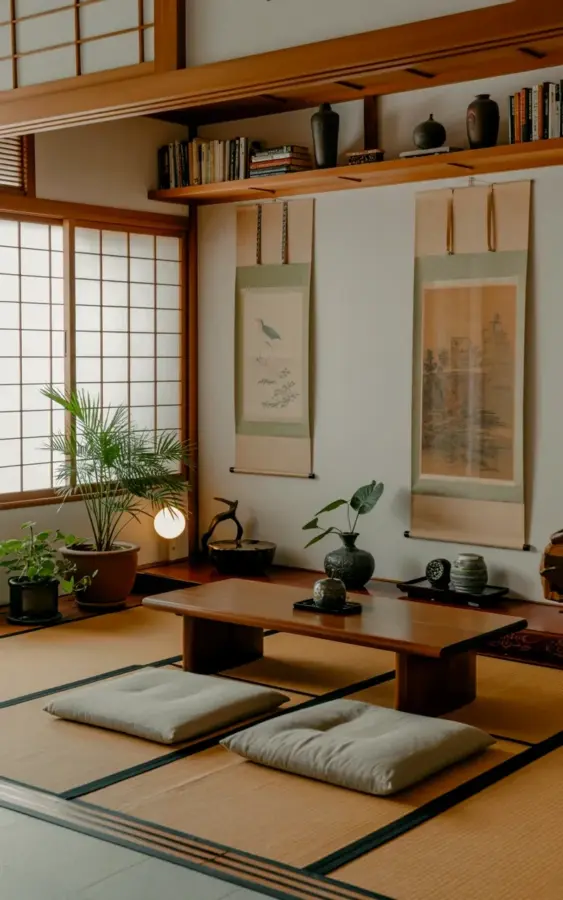
You do not need thousands of dollars to create a serene, minimal space. This budget Japanese living room with tatami, shoji screens, and hanging scrolls is proof that calm design can be affordable. The photo shows a real setup: tatami mats cover the floor, classic shoji screens frame the left side, and a low wooden coffee table sits in the middle with two light gray floor cushions. A built-in shelf runs along the top, holding books and ceramic vases, while two hanging scrolls bring art without a big price tag. If you love the idea of a zen retreat but worry about cost, this guide will show you exactly how to get the look without breaking the bank.
Start with Affordable Tatami Mats as Your Flooring Base
Tatami mats are the foundation of any Japanese-inspired room. In the photo you can see the warm, woven texture covering the entire floor. True tatami can be expensive, but there are smart ways to cut costs. Look for polypropylene or rush-blend tatami mats online. They look similar but cost half the price. I found a 10 mat set for under $200 on a home decor sale site. Make sure you measure your room carefully. If the whole floor is too much, lay down a large central mat and leave bare wood or carpet around the edges. That keeps the feel while saving money.
Installation is simple. Most budget tatami mats come in interlocking squares. Simply place them over a clean, flat floor. No glue needed. The soft give of the mats feels great underfoot and adds warmth. If you have pets, choose a durable blend that resists scratches. I personally recommend starting with a 6 tatami mat area (about 9 x 12 feet) for a standard living room. That size creates the perfect island of calm.
Add Shoji Screens for Instant Zen Atmosphere on a Budget
Shoji screens are the second major element in the photo. You can see the wooden frames with translucent paper panels on the left side of the room. They diffuse light softly and create a sense of privacy. Real shoji screens with rice paper run high in price, but you have cheaper options. Look for folding screens made of bamboo and polyester paper from home stores. A three panel screen costs around $80 to $120. Another idea is to make simple frames from lightweight wood and attach adhesive fabric that looks like shoji paper. I tried this on a window blind and it worked beautifully.
Place your screens against a wall or in front of an unappealing corner. In the photo, the screens act as a divider between the living area and another space. If you rent, freestanding screens are perfect because you can move them. For even less money, hang curtain panels made of linen or light cotton that mimic the horizontal lines of shoji. The key is the grid pattern and soft glow. You do not need authentic materials, just the visual effect.
Choose a Low Wooden Coffee Table and Floor Cushions
At the center of the room sits a low wooden coffee table, surrounded by two light gray square cushions. This layout is central to Japanese living. A low table encourages sitting on the floor, which changes your posture and the energy of the room. You can find a solid wood coffee table with short legs at thrift shops or IKEA for under $60. Look for rectangular or square shapes with clean lines. Avoid high gloss or heavy carving. A simple, unfinished pine table can be stained dark walnut to match the wood tones in the screens.
- Floor cushions: Buy large, firm floor cushions or zabuton. The gray cushions in the photo are soft yet supportive. You can get a set of two for about $30 online. Choose a muted color like gray, beige, or green to keep the room calm.
- Seating height: Your table should be around 12 to 16 inches high. Standard coffee tables are too tall. Measure from the floor to your knee when seated on a cushion. That is the ideal height.
- Extra seating: Add a small wooden stool or a low bench if you need more space. I use a simple wooden crate turned on its side as a side table and extra seat. It looks intentional and costs nothing.
Decorate with Hanging Scrolls and a Built-in Shelf
Art finishes the room. In the photo, two hanging scrolls adorn the white walls. One features a bird in light colors; the other uses a darker palette. You do not need expensive original paintings. Look for reproduction scrolls (kakejiku) on Etsy or eBay. Many sellers offer them for $20 to $40 each. The key is the vertical format and simple subject matter. Birds, bamboo, or calligraphy work best. I found a set of two scrolls for $35 that included a crane and a mountain scene. They instantly made my living room feel intentional.
The built-in shelf visible along the top of the wall adds storage without cluttering the floor. If you do not have a built-in, install a floating shelf at eye level. Use it to display a few books (spines facing in or out), dark ceramic vases, and a small plant. The photo shows ceramic vases in a dark glaze. You can find these at thrift stores or dollar stores and paint them with matte black or deep brown spray paint. Keep the items sparse.
Do not overcrowd. A shelf with three books, one vase, and a small branch is plenty. This is where the principle of minimalism saves money. Fewer items cost less and look better.
Additional Tips to Keep Your Budget in Check
Sticking to a tight budget means making smart choices. Here are specific strategies I used when creating my own room:
- Thrift and upcycle. Check Facebook Marketplace for used tatami mats, folding screens, and low tables. I found a beautiful shoji screen for $25 that needed a new paper backing. A roll of adhesive shoji paper cost $10. Total: $35 for a screen that would retail for $150.
- DIY the hanging scrolls. Buy blank white or cream canvas panels. Paint a simple bird or branch using acrylics. Use a wooden dowel and string to hang. Total cost under $15 for two.
- Use natural light. The budget look relies on soft, natural light. Keep curtains sheer or use blinds. Good lighting reduces the need for expensive lamps.
- Swap out clutter for purpose. Every item in the room should serve a function or bring calm. That helps you avoid buying unnecessary decor. I only buy something if I can picture it on my shelf for more than a month.
These small steps add up. You can build a serene Japanese style living room for around $300 to $500 total, depending on the size of your space.
How to Style Your Space for Maximum Calm
Once you have the main pieces, arrange them with intention. In the photo, the low table is centered, cushions are placed directly opposite each other, and the screens frame the scene. Everything feels balanced. Place your table slightly off center if your room is square. That creates a gentle asymmetry, which is common in Japanese design. Leave a clear path from the door to the sitting area. Do not block the screens or the scrolls.
Add a small floor lamp with a rice paper shade for evening warmth. A single ceramic incense holder and a tiny bamboo plant on the shelf can tie the whole look together. Remember that less is more. Resist the urge to add throw pillows or blankets in bright colors. Stick to neutral tones: beige, gray, dark brown, white. This palette is budget-friendly because it works with what you already own.
The final step is to sit on your cushions and spend ten minutes doing nothing. That is the whole point of the room. When I first finished my setup, I turned off my phone and just watched the light shift through the shoji screens. It felt like a vacation without leaving the house.
Creating a budget Japanese living room is not about perfection. It is about choosing a few key elements and letting them breathe. The tatami, the screens, the low table, the scrolls, and the simple shelf all work together. You can replicate this look at any budget level. Start with the floor and the screen, then build out slowly.
I hope this guide helps you turn your own room into a calm retreat. If you decide to try it, take a photo and share it. I would love to see how your space turns out. Save this article for reference when you start shopping, and feel free to drop your questions in the comments below.
#japanesehomedecor #budgetfriendly #tatamimat #shojiscreen #minimalroom
Leave a Comment