The Allure of Imperfection: Why Your Garden Path Should Not Be Straight
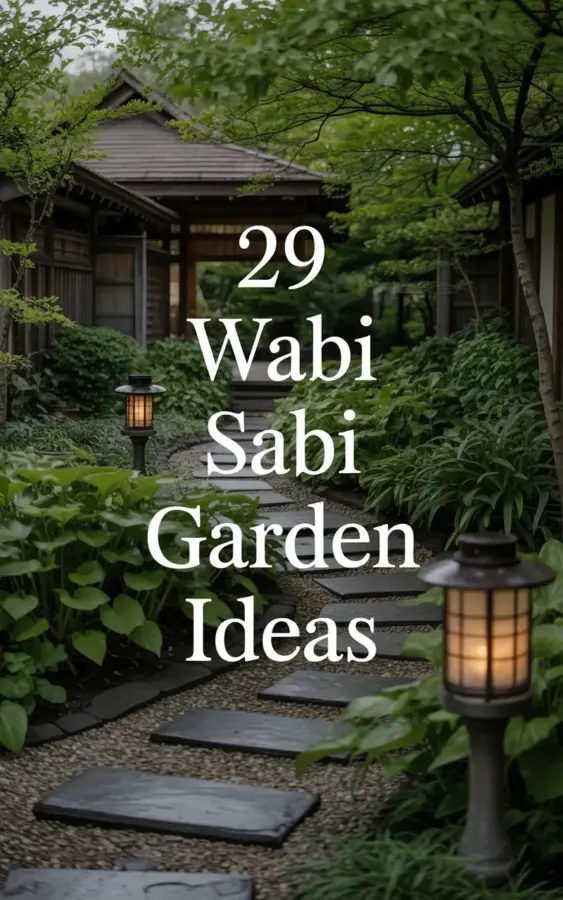
One of the most common mistakes in a wabi sabi garden path is making it too perfect and symmetrical. I have seen so many homeowners lay out stepping stones like a marching drill, with equal gaps and ruler-straight lines. That approach kills the very soul of wabisabigarden design. True wabi sabi celebrates the irregular, the weathered, and the asymmetrical. Instead, embrace irregular stepping stones, loose gravel, and natural curves. Look at the photograph that inspired this guide: dark gray stone stepping stones curve gently through lush green foliage, with light-colored gravel filling the gaps. Two traditional black metal lanterns glow warmly, one on each side, and a wooden structure with dark brown shingles sits quietly in the background. The path follows the land, not a ruler. Let me walk you through the specific mistakes to avoid and how to build a path that feels genuinely organic and serene.
Mistake #1: Choosing Identical, Perfectly Shaped Stepping Stones
Massive, rectangular concrete pavers may be easy to install, but they scream “hardware store” instead of “centuries-old garden.” In wabi sabi, imperfections are treasured. You want stones that vary in size, shape, and color. The dark gray stones in the reference image are irregular rectangles, not cookie-cutter squares. Some are slightly rounded at the edges, others have a rougher surface. That variation creates visual rhythm.
When selecting stones, look for natural flagstone with chipped edges or reclaimed stone that shows wear. Avoid polished finishes. Even a crack or a small chip adds authenticity. If you must use cut stones, place them with the uneven side facing up and vary the gap widths between them.
Mistake #2: Laying Stones in a Dead-Straight Line
Symmetry is the enemy of wabi sabi. A path that runs like a laser beam through your garden feels rigid and rushed. The path in our photo sweeps in a gentle curve, following the natural contours of the land. That curve was not accidental. It mirrors a subtle slope or a cluster of plants. To achieve this, walk your intended route first, letting the terrain guide your steps. Avoid surveying with a string line.
- Let the path meander around trees, boulders, or existing shrubs.
- Use a garden hose to lay out curves before setting any stone.
Step back and adjust the hose until the line looks natural, then mark it with spray chalk. - Vary the stepping distance. Some steps can feel close together, others farther apart, depending on the pace you want the visitor to take.
Mistake #3: Skimping on Gravel Texture and Color Contrast
Notice in the image that the gravel between the dark stones is light colored, almost a pale beige or white. That contrast is vital. Dark stones against dark soil or dark gravel would blur together and lose definition. The light gravel frames each stone and highlights the irregular gaps. It also provides a satisfying crunch underfoot, which is part of the sensory experience wabi sabi values.
Select gravel that is angular, not round river pebbles. Pea gravel shifts too much and feels unstable. Crushed granite or decomposed granite in a warm off-white, grayish beige, or even a subtle pink tone works beautifully. Avoid bright white gravel, which can look artificial. The goal is a weathered, earthy palette.
Mistake #4: Ignoring the Role of Lighting and Lanterns
A wabi sabi path is not just for daytime. The lanterns in the photo are black metal with warm glowing lights, one positioned on the left and one on the right. They do not match perfectly (one is slightly taller, one is a different lantern style). That asymmetry is intentional. Traditional Japanese garden lanterns (toro) are often placed at turning points or near gates to guide the eye and cast soft shadows.
Do not line your path with identical, evenly spaced solar stake lights. That looks like an airport runway. Instead, place two or three lanterns at strategic spots: near a bend, beside a large stone, or by a bench. Use warm LED bulbs (2700K to 3000K) to mimic the glow of candlelight. Let the light pool on the gravel and pick up the textures of the stone and surrounding foliage.
Mistake #5: Forgetting the Surrounding Plantings and Structure
The path in the photo does not exist in isolation. It leads the eye toward a Japanese-style wooden structure with dark brown shingles. That structure anchors the scene and gives the path a destination. Yet many people build a beautiful path and leave the borders sparse. Wabi sabi thrives on the interplay between hardscape and softscape. The lush green foliage brushing against the stone edges softens the path and integrates it into the garden.
Plant low-growing moss, creeping thyme, or dwarf mondo grass along the edges. Let some plants spill onto the gravel. Do not trim everything into tight geometric shapes. Allow ferns, hostas, or Japanese forest grass to grow loosely. The path should feel like a discovery, not a forced corridor.
How to Fix a Path That Already Feels Too Perfect
Maybe you have already installed a symmetrical path and now you regret it. Do not panic. You can soften it with a few adjustments. First, remove every third or fourth stone and replace it with a larger or smaller irregular piece. Change the spacing. Add a curve by taking up the straight stones at the end and relaying them in a gentle arc. Introduce moss or ground cover between stones to break up the uniformity. You can also reposition your lanterns to create asymmetry and add a bench or a large pot on one side to shift the visual weight.
Final Thoughts: Let the Path Tell Its Own Story
A wabi sabi garden path is not about perfection. It is about patience, acceptance, and the beauty of natural aging. The subtle curve, the mismatched stones, the weathered lanterns, and the soft gravel all work together to create a path that feels as though it has always been there. Next time you design a garden path, resist the urge to measure and align. Instead, follow the land, trust your eye, and let imperfection lead the way. Save this photo as a reminder that a little unevenness can be the most grounding element in your entire garden design. Have you planned your own wabi sabi path yet? I would love to hear about the stones and curves you choose.
#wabisabigarden #gardendesign #japanesegarden #gardenpath #landscapingideas
Leave a Comment