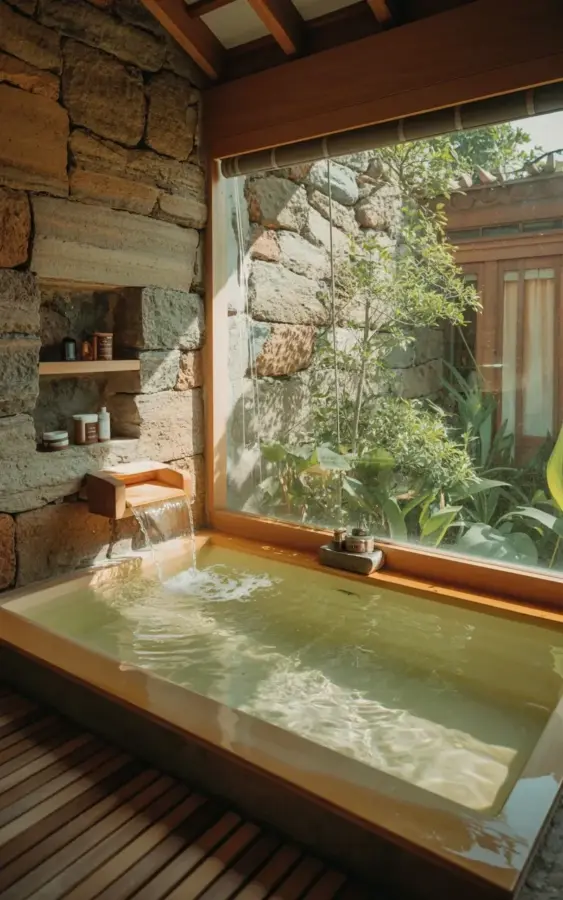
You’re scrolling through pins at midnight, half-watching some show you’ve already seen, and then one image makes you stop cold. It’s a wooden tub, nestled right into a rough stone wall, with water pouring into it from above like a secret mountain spring. And I get it. I completely get it. That indoor soaking tub, built into the stone with a waterfall, isn’t just a bathroom fixture. It’s a whole mood. It’s the “I’m not leaving this house ever again” energy.
Look, there are bathtubs, and then there are *sanctuaries*. The photo that sparked this entire daydream shows exactly what I mean. A light, polished wooden tub sits flush against a wall of raw, textured stone. A waterfall feature cascades from above, filling the tub with a constant, soothing rush. To the right, a huge window frames nothing but lush, green foliage outside. You feel like you’re in a treehouse, not a bathroom. Honestly, if this is what a spa day looks like, sign me up for a lifetime membership.
And the best part? You don’t need to be a millionaire or a professional architect to understand how to make this happen. Let’s break down exactly why this works, piece by piece, so you can figure out which part of this dream setup is right for you.
The Stone Wall Behind the Tub Feels Like a Hug from a Mountain
Look at the wall in the picture again. That stone isn’t smooth or perfect. It’s rough, layered, and has visible natural patterns that make it look like it’s been there for centuries. That’s the magic of a real stone wall, or even faux stone panels done right. It gives your bathroom a sense of permanence and weight that drywall just can’t match.
The contrast is what truly sells it, though. You have this cold, hard, rugged stone, and then right in front of it sits a warm, smooth, light wooden tub. It’s a genius design trick. The stone adds drama and texture, while the wood brings in all the warmth, so the room never feels like a cave. It balances out into that perfect, cozy natural bathroom vibe.
If you’re in a rental or can’t install real rock, don’t stress. High-quality stone veneer panels are lightweight and easy to glue onto existing walls. They give you the exact same visual texture and that “built-in” feel without needing a structural engineer. Look for panels with uneven edges to get that authentic, layered appearance.
How a Waterfall Bathtub Feature Changes the Sound of Your Room
Now, about that waterfall. The visual element is obviously spectacular, but I think the audio is the secret superpower. A waterfall bathtub feature doesn’t just fill your tub with water; it fills your ears with white noise. It completely masks the sound of traffic outside, noisy neighbors, or that weird hum the refrigerator makes. It’s an instant relaxation trigger.
From a practical standpoint, these features are actually simpler than they look. They usually involve a small, quiet pump that recirculates the water from the tub to a spout above. The pump is tucked away behind the wall or under the tub, so you just hear the gentle stream, not a mechanical drone. Most have adjustable flow rates, too. So you can go from a soft trickle to a stronger pour depending on your mood for the day.
Here’s a little something I didn’t expect to learn: you can install a standalone waterfall spout onto almost any existing bathtub wall. You don’t need to have the waterfall built into the ceiling from the start. There are wall-mounted waterfall spouts that jut out a few inches and look ultra-modern. You just your standard tub, run the pipe up the wall inside the stone, and boom, you have your own private waterfall.
Why a Wooden Soaking Tub Beats Out Every Fancy Acrylic Option
Let’s talk about the tub itself. This isn’t your run-of-the-mill fiberglass clawfoot tub. A wooden soaking tub, usually made of cedar, cypress, or teak, offers a completely different soaking experience. The wood naturally self-insulates. What does that mean? The water stays hot for much, much longer than it would in a plastic or metal tub. I’m talking a solid hour of soaking without constantly topping up the hot water.
There are a few maintenance things to know, though, because nobody tells you this. Wooden tubs need to be kept full of water or at least damp when not in use. If the wood dries out completely, the planks will shrink and the seal can break. It’s not a huge deal, but it requires a specific routine. You can’t just drain it and leave it dry for a week. You have to either leave the water in it or fill it once a week, so the wood stays swollen and watertight.
Honestly, the quirky maintenance is part of the charm for me. It forces you to use the tub more often, which is kind of the whole point, right? And that light, polished wood in the image? That’s a pale cedar, and the smooth surface feels almost silky against your skin. It’s a completely different tactile experience compared to cold porcelain.
The Treehouse Window: Bringing the Outdoors In Without the Bugs
The stone and wood are fantastic, but the window in this photo is the true genius move. It’s placed right at the side of the tub, so you can lay back, sink into the hot water, and just stare out at the green leaves. It gives you the feeling of bathing outside, but with climate control and zero mosquitoes. That’s the smartest hack in the room.
The natural light pouring through that window is a huge factor, too. It makes the wood look warmer and the stone more detailed. Not to mention, having that view while you soak just recalibrates your entire nervous system. It’s impossible to think about your to-do list when you’re literally eye-level with a swaying fern. It’s the natural bathroom vibes you just can’t fake with candles alone.
For privacy, most people worry about the window situation. In the photo, the foliage outside does all the work. If you don’t have dense natural shrubbery, you can use frosted film on the bottom half of the glass, or plant some tall potted plants right outside the window. You get the light and the greenery, but no one gets a show.
What to Consider Before You Commit to This Aesthetic
Before you start knocking down walls (or hiring someone to), there are a few realities to consider. Because let’s be real, building something like this involves more planning than just buying a shower curtain.
– **Drainage and plumbing:** The tub has to drain somewhere. You need a floor drain near the tub or a way to pump the water to an existing drain. It’s not a simple “drop-in and hook up” situation, but a good plumber can absolutely handle it.
– **The weight factor:** A wooden tub filled with water weighs a serious amount. You’re talking hundreds of pounds. Your floor joists need to be able to support that weight. If it sits on a concrete slab, you’re in the clear. If it’s on a second floor, you’ll definitely need an engineer to check the structure.
– **Ventilation:** All that steam and moisture needs to escape. A good exhaust fan (or an operable window) is non-negotiable, or you’re looking at potential mold issues down the line.
– **The wooden shelf niche:** I love this detail in the photo, that little carved-out shelf for soap or candles. It’s a small custom touch that adds a ton of function, and it makes the setup feel truly built-in and intentional.
Creating Your Own Cozy Bathroom Ideas Without a Total Reno
Here’s the thing. Maybe you can’t build a stone waterfall wall this month. I get it. But you can absolutely borrow the spirit of this design on a smaller scale. The core idea here is combining natural textures for a peaceful retreat. If your current bathroom feels sterile, bringing in wood, stone, and plant life will instantly shift the energy.
Swap out your plastic mat for a teak wood one. Add a small tabletop fountain next to the sink for that trickling water sound. Invest in some good, warm-toned lighting to mimic that natural afternoon glow. Honestly, just adding a giant potted plant near the tub can do wonders for your connection to nature while you relax.
Another easy win is switching your standard shower curtain to a natural linen weave or a wood-tone panel. It instantly breaks up the white bathroom wasteland and adds depth. These small swaps won’t transform your room into a stone grotto, but they’ll make it feel way less like a hospital and way more like a spa.
The Verdict on This Sensory Dream of a Bathroom
This photo is effective because it appeals to every single one of your senses. You have the soft sound of the waterfall, the smooth texture of the wood against your skin, the earthy smell of wet stone and foliage, the warm sight of the leafy green window, and the feeling of hot water working through your shoulder muscles. It’s a total sensory reset, and that’s why it’s stuck in your head.
I’m not gonna lie, looking at this setup makes me want to completely redo my entire guest bathroom. But for now, I’ll do what the Pinterest caption says: save it for later. It’s a perfect blueprint for what a cozy bathroom idea should actually feel like, a break from the world, not just a place to get clean.
So, where do you think you would start? With the wood, the stone, or that gorgeous giant window? If you’re as obsessed with this treehouse bathroom vibe as I am, go ahead and save this post for your future renovation planner. It’s a little reminder for later that your daily soak shouldn’t be an afterthought, it should be the main event.
Leave a Comment